Best Mini Fridge With Freezer: 2026 Buying Guide
The best mini fridge with freezer for most US buyers is a 3.0 to 4.5 cubic foot unit with a separate sealed freezer door, since that size holds a real week of groceries without eating up dorm, office, or apartment floor space. Below is a breakdown of what actually matters when you shop, plus a few models worth a look.
What Makes a Mini Fridge With Freezer Worth Buying
A mini fridge without a real freezer only gets you cold drinks and leftovers. Once you add a sealed freezer compartment, even a small one, you can keep ice packs, frozen meals, and ice cream on hand, which matters if the unit is your only fridge in a dorm room or a home office.
Look for these things before you buy:
- A freezer door that closes on its own hinge, not just a shelf inside the main compartment
- An adjustable thermostat with visible temperature markings, not a single unlabeled dial
- A reversible door, useful if the fridge sits in a tight corner
- A noise rating under 45 decibels if it will sit near a bed or desk
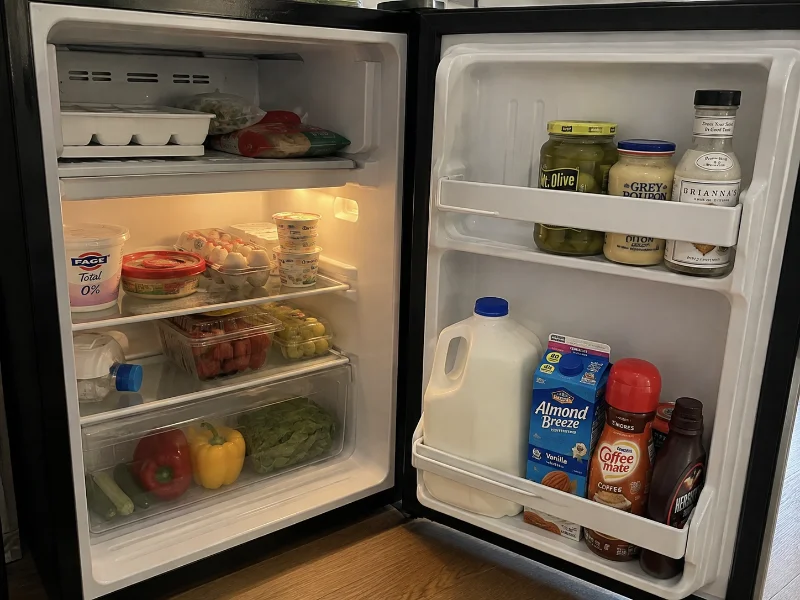
Door storage matters more than people expect when they first shop. A fridge with three or four door shelves holds condiments, drinks, and small jars without crowding the main shelves, which frees up room for actual meals and leftovers on the inside.
Top Picks for Best Mini Fridge With Freezer in 2026
Prices and availability shift often on Amazon and Walmart, so treat the ranges below as a starting point and check current listings before you buy.
1. Danby Compact Fridge Freezer Combo
Danby’s compact units are common in Canadian and US dorm rooms because the freezer compartment actually holds a couple of frozen pizzas flat, not just an ice tray. The 3.2 cubic foot version runs around 200 dollars and includes a scratch-resistant worktop, which helps if you plan to use the top as extra counter space.
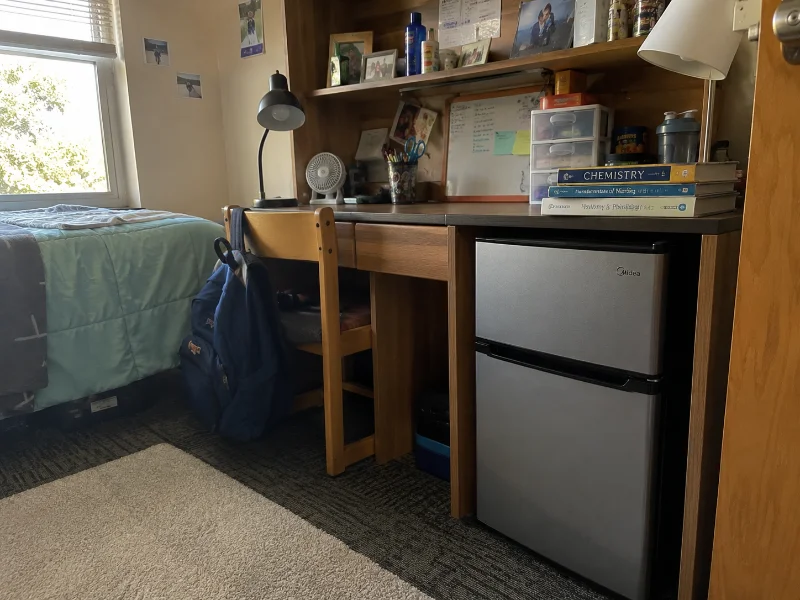
The main tradeoff is depth. These units sit deeper front to back than some competitors, so measure your space before ordering, especially if it needs to fit under a desk.
2. Frigidaire Retro Mini Fridge With Freezer
Frigidaire’s retro line pairs a rounded 1950s-diner look with a genuinely usable freezer box, not just a token compartment. The 4.5 cubic foot model gives enough room for a small household’s overflow storage, and buyers commonly use it as a second fridge in a garage or basement.
It runs louder than the Danby unit during a full cooling cycle, so it is not the first choice for a bedroom.
3. RCA Mini Fridge With Freezer Compartment
RCA’s budget line sits under 150 dollars for the 3.0 cubic foot size and covers the basics: a wire shelf, a small freezer box at the top, and a mechanical dial thermostat. Build quality is lighter than Danby or Frigidaire, so it suits short-term use, such as a college semester or a temporary rental, more than a decade of daily use.
4. BLACK+DECKER Mini Fridge With Freezer
BLACK+DECKER’s compact fridge line sells widely at Target and Walmart in the 3.2 to 4.3 cubic foot range, and the freezer box on most versions holds a stack of frozen dinners rather than just ice cubes. The door shelves are deep enough for a gallon of milk or a large juice bottle, which some competitors in this price range skip.
Buyers who use it as an office fridge tend to like the flat top, which doubles as extra surface space for a coffee maker or microwave. The compressor cycle is audible in a quiet room, so it works better a few feet from a desk than right next to one.
5. HomeLabs Mini Fridge With Freezer
HomeLabs targets the same 3.3 cubic foot niche and adds a reversible door as standard, which matters if you’re placing the fridge in a corner where a left-swing door would hit a wall. The freezer compartment sits behind its own small door rather than an open shelf, which helps it hold temperature better when the main door opens and closes throughout the day.
It costs a bit more than the RCA model, and the extra cost sits mostly in the freezer door and the thicker shelf glass rather than in any feature you’d notice day-to-day.
How to Choose the Right Size and Capacity
Cubic footage is the number printed on the box, but it rarely matches usable space once shelving and the freezer box eat into it. A fridge listed at 3.5 cubic feet often gives you closer to 2.8 cubic feet of actual storage after the freezer compartment is accounted for.
Match the size to how you will use it:
- Single dorm or office use: 1.7 to 3.0 cubic feet
- Studio apartment as a primary fridge: 3.5 to 4.5 cubic feet
- Second fridge for drinks or overflow: 4.5 to 6.0 cubic feet
If you are buying for a dorm, check your school’s housing rules first. Many US colleges cap mini fridge dimensions or wattage, and a fridge that exceeds the limit gets flagged during move-in inspection.
Measure the doorway and any hallway turns before you order online. A 4.5 cubic foot unit is usually around 33 inches tall and 21 inches wide, and it can still get stuck on a narrow apartment stairwell turn if you don’t check the numbers first. Most retailers list exact dimensions in the product specs tab, not just the headline capacity figure.
Mini Fridge With Freezer vs a Full-Size Second Fridge
A mini fridge with freezer costs less upfront, usually 150 to 300 dollars against 500 dollars or more for a compact full-size second fridge, and it uses less floor space and less power. The freezer compartment on a mini fridge is small, though, often under half a cubic foot, so it works for ice packs and a few frozen meals rather than for real bulk freezer storage.
If you regularly buy meat in bulk or stock a month of frozen meals, a small upright or chest freezer paired with a separate mini fridge usually serves you better than trying to get both functions from one small combo unit. For everyday use in a dorm, office, or studio apartment, the combo unit covers the actual need without the added cost and space of two separate appliances.
Energy Efficiency and Running Costs in the US
A compact fridge with a freezer typically draws 60 to 120 watts while actively cooling, and cycles on and off through the day rather than running constantly. At the US average residential electricity rate, that works out to roughly 5 to 12 dollars a month for most compact models, depending on size, insulation quality, and how often the door opens.
Look for the ENERGY STAR label when you compare models. ENERGY STAR-certified compact refrigerators use less power than uncertified units of the same size, and the label also signals better insulation, which means less temperature swing when the door opens and closes.
A few habits also affect the electric bill more than most buyers expect. Setting the thermostat one notch colder than needed can add a dollar or two a month for no real benefit, since most food stays safe in the 37 to 40 degree Fahrenheit range recommended by the USDA. Keeping the fridge reasonably full, even with a jug of water taking up empty space, also helps it hold temperature more efficiently than running mostly empty, since a full fridge has more thermal mass to resist warming each time the door opens.
Placement Tips for Dorms, Offices, and Small Apartments
Leave at least two inches of clearance on the sides and back of the unit so the compressor coils can release heat properly. A fridge pushed flush against a wall runs hotter, works harder, and wears out faster.
Keep it off carpet if possible, or use a hard mat underneath. Vibration on soft flooring can loosen internal components over years of use, and it also makes the unit sound louder than it actually is.
Avoid placing it next to a radiator, in direct sun, or right beside a stove, since nearby heat forces the compressor to run longer cycles to hold the set temperature.
Maintenance and Common Issues
Frost buildup in the freezer compartment is the most common complaint with compact units, since most don’t have auto-defrost. Unplug the fridge and let it defrost fully every one to two months if you notice more than a quarter inch of ice forming; otherwise, the freezer loses usable space, and the compressor works harder than it needs to.
Wipe the door gasket with a damp cloth every few weeks. A gasket with dried food residue or a small tear lets warm air leak in, which is a common reason a mini fridge runs constantly but still feels warm inside.
If the fridge hums normally but the freezer section stays warm while the main compartment cools fine, that usually points to a blocked air vent between the two compartments rather than a failed compressor, and it’s worth checking before assuming the unit needs replacing.
Most compact units come with a one-year manufacturer warranty, and it’s worth registering the product online within the first month since some brands, including Danby, shorten claim windows for unregistered units. Keep the receipt or order confirmation as backup, especially if you bought through a third-party Amazon seller rather than directly from the brand.
Noise and Where It Actually Fits
Compressor-based mini fridges, which cover most models in this size range, cycle on and off rather than running the whole time silently. A unit rated around 40 decibels sounds close to a quiet conversation at full cycle, while anything above 50 decibels is noticeable in a small bedroom at night.

Thermoelectric mini fridges run quieter and skip the compressor hum entirely, but they don’t cool as effectively and rarely include a real freezer compartment worth using. For anyone who specifically wants a working freezer section, a compressor model is the better fit despite the extra noise, and placing it a few feet from the bed or desk usually solves most of the noise complaint on its own.