
Accent Wall Ideas That Actually Transform a Room
An accent wall is one of the fastest ways to change how a room feels without touching every surface in it. Done well, it draws the eye, adds depth, and gives a plain room a sense of intention. Done poorly, it can feel like an afterthought or clash with everything around it.
The difference usually comes down to two decisions: which wall you choose, and which technique fits the room’s existing style. Below are the strongest accent wall ideas being used in homes right now, along with guidance on picking the right wall and avoiding the most common mistakes
How to Choose the Right Wall for an Accent
Not every wall makes a good accent. The strongest choice is usually the first wall your eye lands on when you enter the room, since that’s the wall doing the most visual work. A wall behind a bed, a sofa, or a dining table works well because it frames furniture that’s already a focal point.
Avoid a wall broken up by doors, windows, or closet openings, since those interruptions weaken the effect. A wall with an existing architectural feature, like a fireplace or built-in shelving, is also a strong candidate because you’re highlighting something the room already has rather than creating a new focal point from scratch.
Bold Paint Color
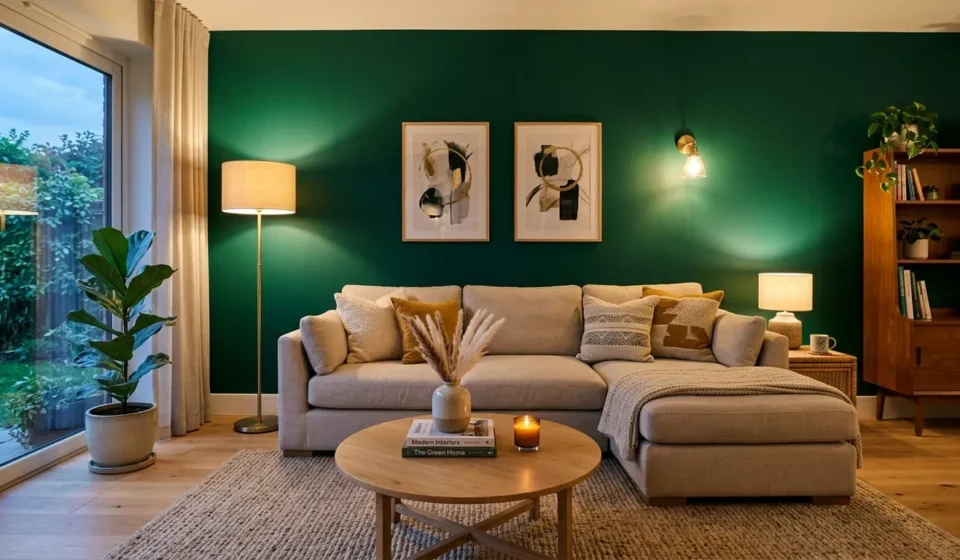
Paint remains the fastest and least expensive way to create an accent wall, and it’s forgiving if you change your mind later. Deep, saturated colors like emerald green, navy, terracotta, or charcoal tend to read as intentional rather than trendy, and they pair well with both warm and cool undertones in a room’s existing palette.
If a fully saturated color feels risky, a muted or dusty version of the same hue gives a similar effect with less visual weight. Test the color in the actual room and at different times of day, since lighting changes a paint color more than most people expect.
Wallpaper as a Statement
Wallpaper has moved well past the floral prints many people associate with it. Large-scale botanical prints, abstract patterns, and textured grasscloth are all popular right now, and peel-and-stick versions make the look renter-friendly since they remove without damaging the wall underneath.
One wall is usually enough. Wallpapering all four walls of a small room can make the space feel smaller, while a single accent wall lets the pattern read as a feature rather than overwhelming the room.
Wood Paneling and Board and Batten
Wood paneling adds texture and architectural interest in a way flat paint can’t. Board and batten, which uses vertical wood strips over a painted or plain base, works especially well in dining rooms, entryways, and bedrooms where you want a more traditional or farmhouse feel.
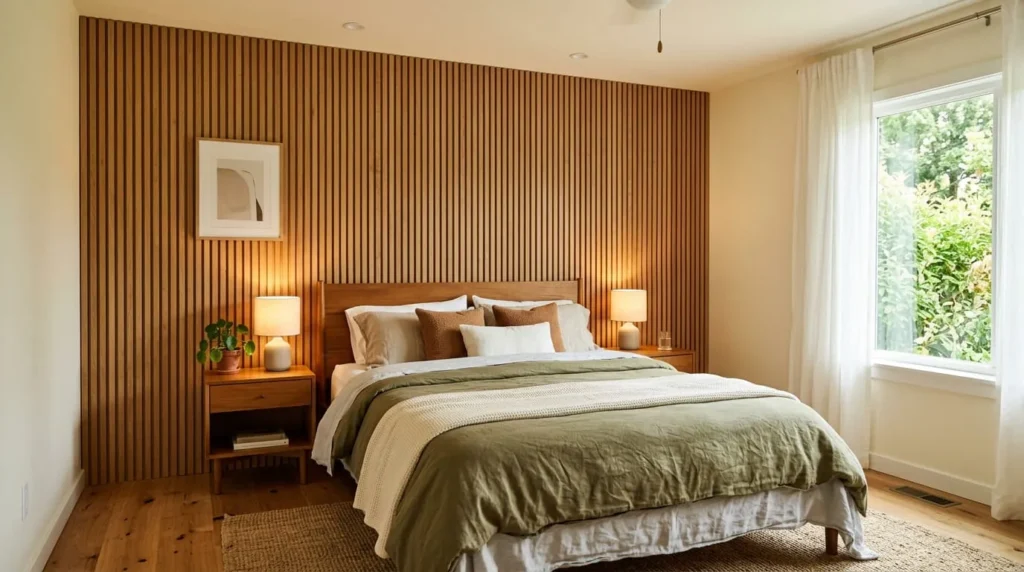
Vertical slat paneling, sometimes called reeded or fluted paneling, gives a more modern look and pairs well with warm wood tones and minimalist furniture. Both options can be painted to match the room or left in a natural wood finish for more contrast. Board and batten paired with a matching crown profile at the ceiling line ties the whole wall treatment together instead of looking like two separate projects.
Textured and 3D Wall Panels
For a more dramatic effect, textured panels made from wood, plaster, or composite materials create shadow and depth that shift depending on the light in the room. Geometric 3D panels are especially effective behind a bed or in a hallway, where the changing angle of light throughout the day adds movement to the wall.
These panels tend to cost more than paint or standard wallpaper, but they don’t require ongoing maintenance beyond occasional dusting, which makes them a reasonable investment for a room you spend a lot of time in.
Exposed Brick or Stone
If your home has brick or stone underneath drywall, exposing it creates an accent wall with genuine character that can’t be replicated with a faux finish. This works particularly well in older homes, converted lofts, and basements where the original structure has interesting texture.
If exposing real brick isn’t possible, brick-look wallpaper or thin brick veneer panels give a similar visual effect without the structural work, though they read slightly less authentic up close.
Gallery Wall as an Accent
Instead of paint or paper, some homeowners turn an entire wall into a curated collection of framed art, photography, or mirrors. This works especially well in hallways, stairwells, and living rooms where you want personality without committing to a single bold color.
The key to a gallery wall that reads as designed rather than cluttered is consistency. Stick to a limited color palette for the frames, and lay the arrangement out on the floor before hanging anything so you can adjust the spacing.
Living Wall With Plants
A living wall, sometimes called a green wall, uses a vertical planting system to turn an entire wall into greenery. This is one of the more involved options on this list, since it requires a watering system or a consistent maintenance routine, but the payoff is a wall that changes and grows over time.
For a lower-maintenance version, a curated arrangement of hanging plants or a single large statement plant against a plain wall gives a similar organic feel without the upkeep of a full living wall system.
Color Blocking and Geometric Shapes
Color blocking uses painter’s tape to divide a wall into sections of different colors or shapes, which lets you use multiple favorite colors without them competing for attention. Geometric shapes like arches, triangles, and overlapping circles are especially popular in nurseries, home offices, and kids’ rooms.
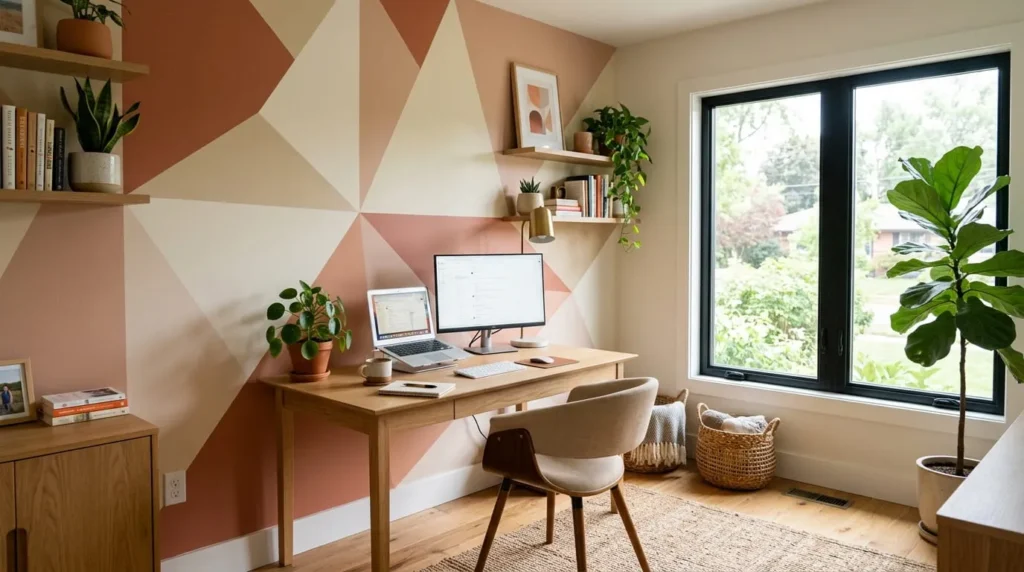
Choosing colors from the same family, rather than high-contrast opposites, keeps the result looking intentional rather than busy. Sketch the design on paper first, since adjusting proportions on a wall after painting is far more work than adjusting a drawing.
Accent Wall Ideas by Room
Living Room
The wall behind the sofa or the wall containing the fireplace are the strongest choices, since both already anchor the room’s layout. Bold paint, wood paneling, or a gallery wall all work well here, depending on how formal or casual the room feels.
Bedroom
The wall behind the headboard is the natural choice, since it frames the bed without competing with the rest of the room. Wallpaper, wood slats, and deep paint colors all work particularly well in a bedroom, where a slightly moodier palette tends to read as calming rather than dark.
Kitchen
An accent wall in a kitchen works best on a section without cabinetry, such as the wall behind open shelving or a dining nook. Tile, bold paint, and wallpaper rated for moisture all hold up well in a kitchen environment.
Bathroom
Because of humidity, paint and wallpaper need to be rated for bathroom use, while tile remains the most durable option for a shower or vanity wall. A patterned tile accent wall behind a freestanding tub is one of the most reliable ways to add visual interest to a bathroom.
Common Mistakes to Avoid
Choosing a color or pattern that doesn’t relate to anything else in the room is the most common misstep, since it makes the wall feel disconnected rather than intentional. Pull at least one element, a color, a material, or a pattern, from something already in the space.
Picking a wall broken up by doors or windows weakens the effect, since the eye has nowhere to rest. And skipping a sample or test patch before committing to a full wall is a mistake worth avoiding entirely, since colors and patterns often look different at full scale than they do on a small swatch.
Getting Started
The easiest way to begin is with the lowest-commitment option that matches the look you want. Paint is reversible and inexpensive, which makes it a reasonable starting point even if your long-term plan involves wood paneling or tile. Once you’re confident in the wall and the color direction, the more permanent options become a much safer investment.