
Chair Height Toilet: What It Is and How to Choose One
A chair height toilet is not a marketing term for a fancier model. It refers to a specific seat measurement, usually 17 to 19 inches from the floor to the top of the seat, built to match the height of a standard dining chair. That two to three inch difference from a standard toilet sounds small until you sit down, since it changes how much your knees bend and how much effort it takes to stand back up.
What Is a Chair Height Toilet
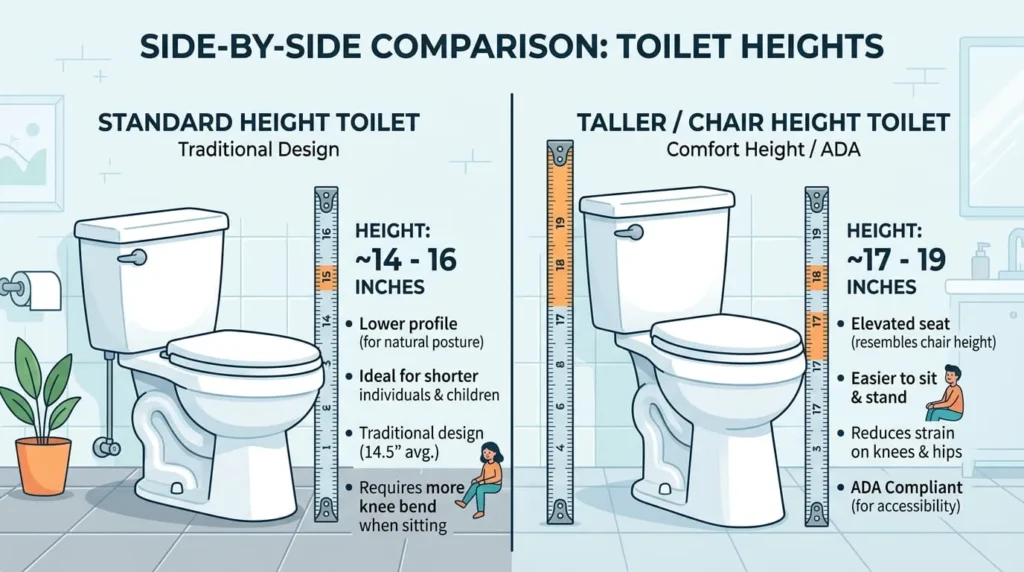
A chair height toilet sits at 17 to 19 inches from the floor to the seat, which is the same range used for standard chairs and dining seats. Manufacturers also sell these under the names comfort height, right height, or ADA height, and all four terms point to the same measurement range, not four different products. The seat height is measured with the lid and seat attached, since the bowl alone without the seat typically runs an inch or so shorter than the listed spec.
This height range exists because it lines up with the requirements in the Americans with Disabilities Act for accessible fixtures, though not every chair height toilet is formally ADA compliant. ADA compliance also involves flush handle placement, clearance around the bowl, and grab bar provisions, so a toilet can sit in the chair height range without meeting the full accessibility code for a commercial bathroom.
Chair Height vs Standard Height Toilet
Standard height toilets measure roughly 14 to 16 inches from floor to seat, which was the default seat height across the industry for decades before chair height models became common. The difference between the two is really about knee angle. A standard height toilet puts your knees higher than your hips when seated, which some people find more natural for a bowel movement but harder to rise from without using your thighs and lower back more aggressively.
A chair height toilet keeps your knees closer to a right angle, similar to sitting in a normal chair, which reduces the effort needed to stand. This is why chair height has become the more common choice in new construction and remodels aimed at adults, while standard height still shows up in children’s bathrooms, guest bathrooms, and older homes that haven’t been updated.
Neither height is objectively better. The right choice depends entirely on who uses that specific bathroom most often, which is a point most buying guides skip in favor of just recommending the taller option by default. A bathroom remodel that swaps the toilet height is also a good time to check the sink faucet, since a dripping cartridge is easy to miss until the rest of the room is already torn apart.
Is a Chair Height Toilet the Same as an ADA Toilet
Chair height and ADA height overlap but are not identical terms, and treating them as interchangeable is a common mistake. ADA guidelines specify a seat height of 17 to 19 inches for accessible toilets, which is the same range most manufacturers use for chair height or comfort height models. Because of that overlap, most chair height toilets sold today do meet the ADA height requirement.
However, full ADA compliance for a commercial restroom also covers flush valve location, clear floor space around the fixture, and grab bar mounting height, none of which are determined by the toilet itself. A chair height toilet installed in a home bathroom is simply a comfortable, taller fixture. The same toilet installed in a commercial building only counts as ADA compliant if the surrounding installation also meets code.
Who Should Choose a Chair Height Toilet
Tall Adults
Anyone over about 5 feet 9 inches tends to notice the difference immediately, since a standard height toilet puts their knees noticeably above hip level when seated. Chair height models remove that awkward crouch and make standing up require less effort on the knees and lower back.
Older Adults and People with Mobility Limitations
For people managing arthritis, joint replacements, or general mobility limitations, the reduced knee bend of a chair height toilet can make a real difference in daily independence. This is the primary reason chair height became the standard recommendation in senior-focused bathroom remodels, well before it became popular in general new construction.
Households With Young Children
Chair height is usually the wrong choice for a bathroom used mainly by young children. A taller seat means their feet dangle above the floor, which makes balance harder and can turn potty training into a bigger struggle than it needs to be. Standard height, or a chair height toilet paired with a sturdy step stool, works better in that situation.
Pros and Cons of Chair Height Toilets
The main advantage of a chair height toilet is easier sitting and standing, which matters most for tall adults, older adults, and anyone recovering from a hip or knee procedure. Many people also find the taller seat simply feels more like sitting in a normal chair, rather than perching on a low stool.
The tradeoffs are real too. A chair height toilet can leave shorter adults and children with their feet not fully flat on the floor, which affects both comfort and posture during use. These models are also frequently larger and heavier than standard toilets, which can make them harder to maneuver into a small bathroom during installation. Some homeowners also need to adjust the height of nearby fixtures, like a toilet paper holder or grab bar, once the seat height changes.
Elongated vs Round Bowl on Chair Height Models
Most chair height toilets come with an elongated bowl rather than a round one, and that is not a coincidence. An elongated bowl extends about one and a half inches further forward than a round bowl, which most adults find more comfortable, and manufacturers pair that shape with the taller seat height because the two upgrades tend to appeal to the same buyer. Round bowl chair height toilets do exist and are usually the better pick for a smaller bathroom where that extra inch and a half of clearance actually matters.
How to Measure for a Chair Height Toilet
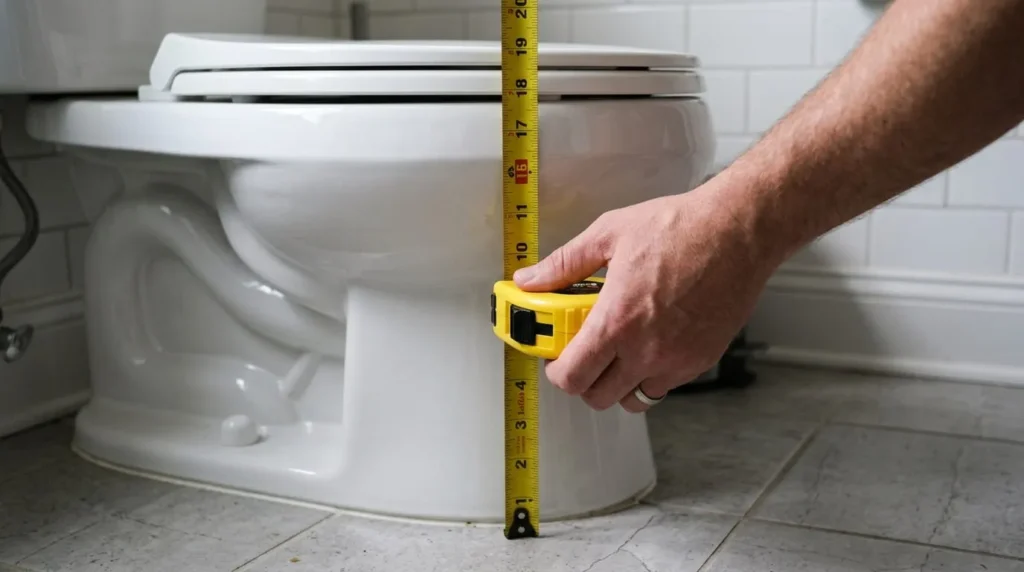
Seat height is measured from the finished floor to the top of the seat, not to the top of the bowl rim. If you are comparing a spec sheet to your current toilet, measure your existing seat the same way before assuming a listed 17 inch model will feel taller than what you have now.
Rough-in distance matters just as much as seat height and is where many buyers get tripped up. This is the distance from the wall behind the toilet to the center of the floor bolts, and it needs to match your existing plumbing, most commonly 12 inches, though 10 and 14 inch rough-ins exist in some homes. A chair height toilet with the wrong rough-in will not fit no matter how much you like the seat height.
Chair Height Toilet vs Tall Height Toilet
Some manufacturers also sell a tall height or extra tall option, which sits two to two and a half inches above chair height, often in the range of 19 to 21 inches. These are aimed at very tall users or anyone who found even a chair height model too low for comfortable standing. Tall height toilets are less common and typically cost more, so they’re worth considering only if a standard chair height model still feels short after you’ve tried one in person
How to Decide Which Toilet Height Is Right for You
If possible, sit on both a standard and a chair height model before buying, since a showroom test tells you more than any spec sheet. Your feet should rest flat on the floor with your thighs roughly parallel to it, without straining to reach the ground or feeling perched too high.
For a bathroom used mainly by tall adults, older adults, or anyone with joint concerns, chair height is almost always the better fit. For a bathroom shared with young children, standard height or a chair height model with a step stool tends to work better in practice. If your household includes both groups and you only have one bathroom to work with, chair height with a step stool nearby is usually the more practical compromise, since it is easier to add a stool for a child than to lower a fixture for an adult later.