
Weed Puller Tool: How to Pick and Use the Right One
Pulling weeds by hand feels simple until your knees are wet, your fingers are raw, and half the roots snap off underground anyway. A good weed puller tool changes that experience completely. It grips the root system, not just the leaves, so the weed does not grow back within a week. The trick is matching the right tool to the right weed and soil, because a tool that works beautifully in loose garden soil can barely scratch compacted clay.
This guide walks through the main types of weed puller tools available in the US market, how to pick one based on your yard, and the technique that actually pulls roots instead of leaving them behind.
What Is a Weed Puller Tool and How Does It Work
A weed puller tool is designed to remove weeds along with their root system, rather than just cutting off the visible growth. Most weeds regrow quickly if any portion of the taproot stays in the ground, so mechanical removal only works when the tool reaches deep enough to grip that root.
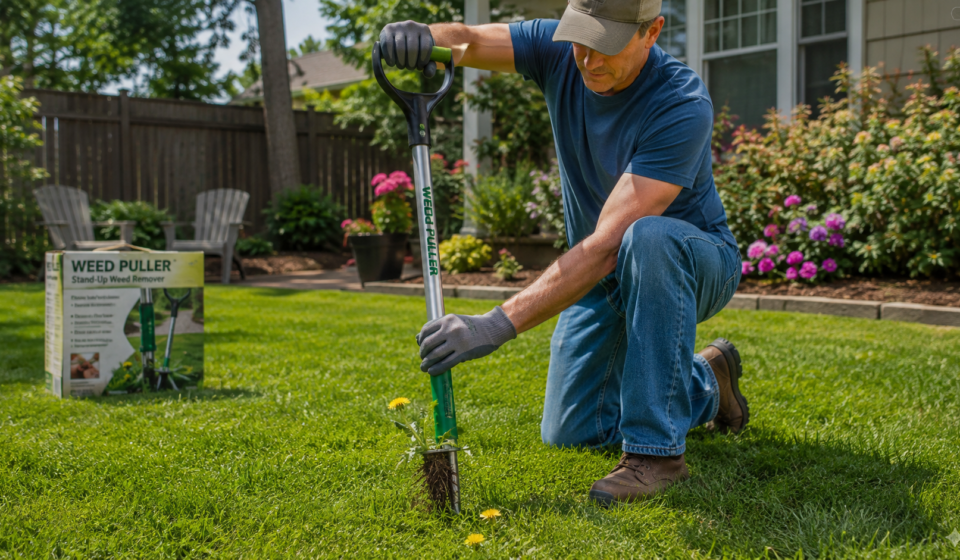
The core mechanism varies by design. Standing pullers use a foot-pedal action to drive prongs into the soil around the root, then a lever ejects the weed once you pull the handle back. Hand tools use a forked or serrated tip that you twist and lift manually. Both approaches avoid the chemical drift and reapplication cycle that comes with spraying herbicide.
Types of Weed Puller Tools
Not every weed puller tool suits every job. Lawn dandelions, garden bed intruders, and driveway crack weeds each call for a different design.
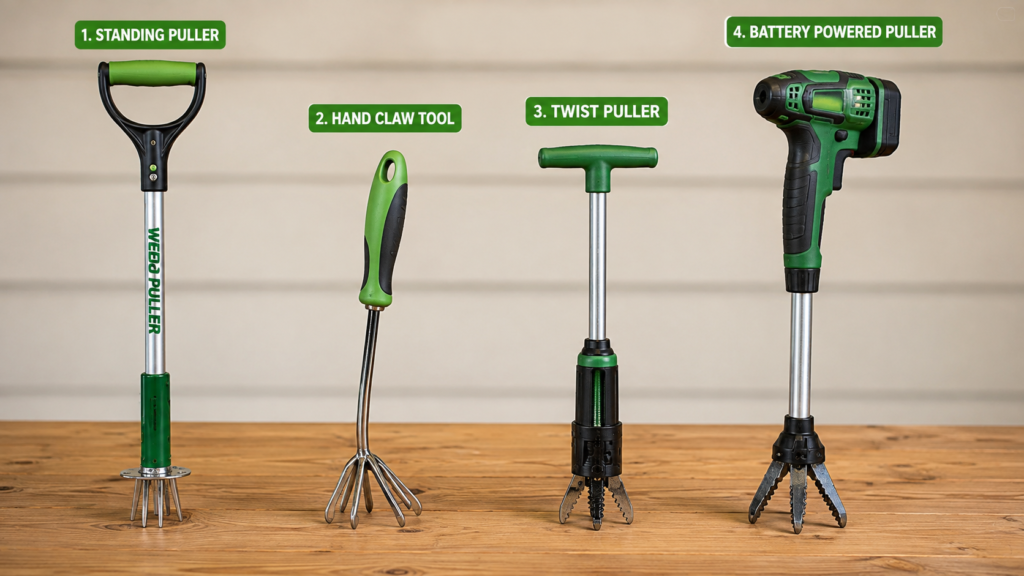
1. Standing or Long-Handle Weed Pullers
These let you work while standing upright, which matters if you have back or knee issues. You position the claw over the weed, step on the foot bar to drive it into the ground, then pull the handle to lift the weed and its root out in one motion. They work best on lawn weeds like dandelions and plantains where you are covering a large area and want to avoid repetitive bending.
2. Hand-Held Weed Pullers
Smaller and cheaper, these tools have a forked or notched metal tip you push into the soil next to the weed, then twist and lever it out. They give you more control in tight spaces such as flower beds, between pavers, or around vegetable seedlings where a standing tool’s footprint would be too large.
3. Claw or Twist Weed Pullers
These have a corkscrew or claw-shaped head that you push down and rotate, gripping the taproot as it goes deeper. They are particularly effective on weeds with a single thick taproot, such as dandelions or thistle, but less useful on shallow, spreading weeds like clover.
4. Powered or Battery Weed Pullers
A newer category uses a small motor to drive the extraction mechanism, reducing the physical effort needed per weed. These make sense if you are clearing a large lawn with a heavy dandelion population, but for occasional garden bed maintenance, the extra cost rarely pays off.
How to Choose the Right Weed Puller Tool for Your Yard
1. Match the Tool to the Weed Type
Taproot weeds like dandelions and dock respond well to claw or twist designs that follow the root straight down. Spreading weeds with shallow, fibrous roots, such as crabgrass or clover, are often better handled with a hand tool that lets you loosen a wider patch of soil at once, since a single-point claw will only grab part of the root mass.
2. Consider Your Soil Type
Compacted clay soil resists prong penetration, so a standing puller with a strong foot-pedal mechanism and durable steel tines will outperform a lightweight hand tool in that setting. Sandy or well-amended garden soil is forgiving enough that even a basic hand claw pulls roots cleanly.
3. Think About How Much Ground You’re Covering
For occasional spot treatment in a flower bed, a hand tool is enough and costs under twenty dollars in most cases. For a quarter-acre lawn with a heavy dandelion problem, the time saved by a standing puller justifies the higher price, since you are not kneeling and standing repeatedly for dozens of weeds.
How to Use a Weed Puller Tool Correctly
1. Best Time to Pull Weeds
Pull weeds after rain or watering, when soil is moist but not soaked. Dry, compacted soil grips the taproot tightly and increases the chance of the root snapping. Early morning also works well since the ground typically holds overnight moisture.
2. Step-by-Step Technique
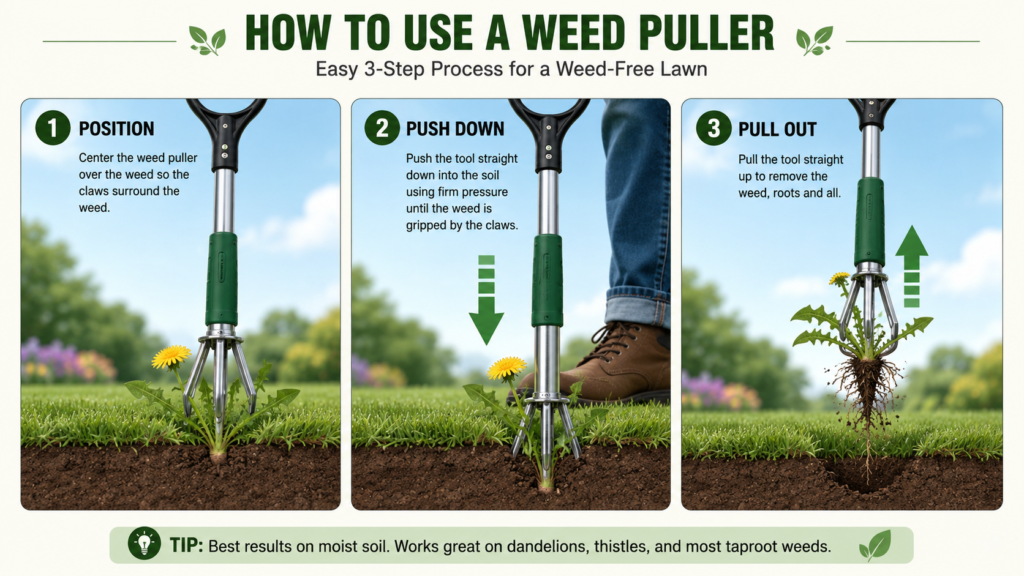
Position the tool’s prongs or claw directly around the base of the weed, close to the stem rather than off to one side. Push straight down until you feel the tines reach past the depth of the visible root crown. For standing pullers, apply steady foot pressure rather than stomping, which can bend the tines. Once the prongs are seated, pull the handle back slowly and steadily. A fast yank is more likely to snap the root than a controlled pull. After the weed lifts free, use the tool’s ejector mechanism, or your hand on a hand-held tool, to shake loose soil off the roots before disposal.
3. Common Mistakes That Leave Roots Behind
Angling the tool instead of driving it straight down is the most common error, since it catches only part of the root. Pulling too quickly before the tines are fully seated is the second most common mistake. Working on bone-dry soil, rather than waiting for moisture, also increases root breakage significantly.
Weed Puller Tool vs Herbicide: Which Works Better
Herbicide kills the weed’s foliage and, with a systemic product, the root system too, but it takes days to work and cannot be used safely near vegetable gardens, pet play areas, or where children run barefoot on the lawn. A weed puller tool removes the weed immediately, leaves no chemical residue, and works in any part of the yard without restriction.
The tradeoff is labor. Herbicide covers a large lawn faster with less physical effort, while a weed puller tool requires you to treat weeds individually. For a lawn with scattered dandelions, mechanical pulling is often the better choice. For a lawn overtaken by an entrenched weed population, many homeowners use both, pulling visible weeds by hand while spot-treating persistent regrowth with a targeted herbicide application.
Maintaining Your Weed Puller Tool
Rinse soil off the tines or claw after each use, since dried mud accelerates rust on carbon steel tools. Dry the metal parts fully before storage, and apply a light coat of oil to the tines once a season to prevent corrosion. On standing pullers, check the pivot joint periodically and add a drop of lubricating oil if the ejector mechanism starts to feel stiff. A well-maintained tool will hold its edge and grip for years, while a neglected one dulls quickly and starts bending on compacted soil.
Best Weeds to Target With a Puller, and Which Ones Aren’t Worth It
Dandelions, plantains, thistle, and dock are ideal candidates, since each grows from a single dominant taproot that a claw or standing puller can isolate cleanly. Clover and crabgrass are trickier because they spread through shallow runners rather than a single root, so pulling addresses individual plants without stopping the spread.
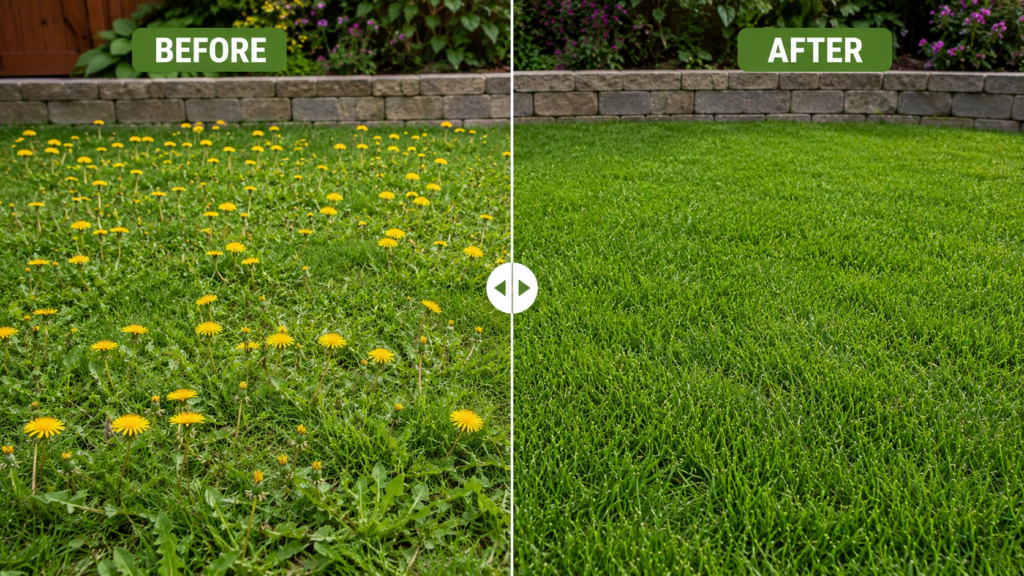
For extensive infestations of runner-based weeds across an entire lawn, mechanical pulling becomes impractical as a sole strategy. In that situation, cultural methods like proper mowing height, overseeding bare patches, and targeted treatment are usually more effective than trying to pull every individual weed.